Are your kitchen cabinets looking dull and grimy? Cleaning them can seem daunting, but knowing the best way to clean kitchen cabinets can transform your space. With over 15 years of experience in home care and maintenance, I’ve compiled effective strategies that ensure your cabinets not only look great but also last longer. In this article, you’ll discover step-by-step cleaning techniques, the best tools for the job, and essential tips for maintaining the beauty of your kitchen cabinets. Say goodbye to stubborn stains and hello to a pristine kitchen environment!
Understanding Kitchen Cabinet Materials
Before diving into cleaning methods, it’s essential to know the materials your kitchen cabinets are made of. Common materials include wood, laminate, and metal, each requiring different care. For instance, wooden cabinets may need gentle cleaning solutions to avoid damaging the finish, while laminate can withstand harsher chemicals. Understanding the material will help you choose the most effective cleaning method, ensuring your cabinets remain in excellent condition while preventing any potential damage.
Wood Cabinets
Wood cabinets often have finishes that can be damaged by harsh chemicals. For cleaning, use a mixture of mild soap and water, applied with a soft cloth. Always test any cleaner on a small, inconspicuous area first to check for adverse reactions.
Laminate Cabinets
Laminate cabinets are more durable and can handle stronger cleaners. A mixture of vinegar and water can effectively cut through grease and grime without harming the surface. Use a soft cloth for application to avoid scratches.
Metal Cabinets
Metal cabinets are typically resistant to stains but can show fingerprints and smudges. A simple solution of soap and water works well, but for tougher stains, a mild abrasive cleaner can be used sparingly to maintain their shine.
Key Points:
- Know your cabinet material for effective cleaning
- Always test cleaners on small areas first
Essential Cleaning Tools and Techniques
Equipping yourself with the right tools is crucial for effectively cleaning kitchen cabinets. Start with basic supplies such as microfiber cloths, soft sponges, and gentle cleaning solutions. Microfiber cloths are ideal for trapping dust and dirt without scratching surfaces. Additionally, using a soft sponge can help remove grime while being gentle enough to protect finishes. Techniques such as wiping in the direction of the grain for wooden cabinets or circular motions for laminate can enhance the cleaning process, leading to better results.
Cleaning Cloths
Microfiber cloths are the best choice for cleaning since they capture dust and dirt without leaving scratches. Use separate cloths for different cabinet types to avoid cross-contamination of cleaning products.
Sponges and Brushes
Soft sponges are excellent for scrubbing without damaging surfaces. For stubborn stains, a soft-bristled brush can help reach corners and crevices effectively. Avoid using steel wool or abrasive pads, as they can scratch finishes.
Cleaning Solutions
A simple mixture of warm water and mild soap is often sufficient for most cabinets. For tough stains, consider adding vinegar or baking soda to your solution. Always ensure solutions are well-diluted to prevent any damage.
Key Points:
- Use microfiber cloths for gentle cleaning
- Select appropriate cleaning solutions based on cabinet material
Understanding Different Cabinet Materials
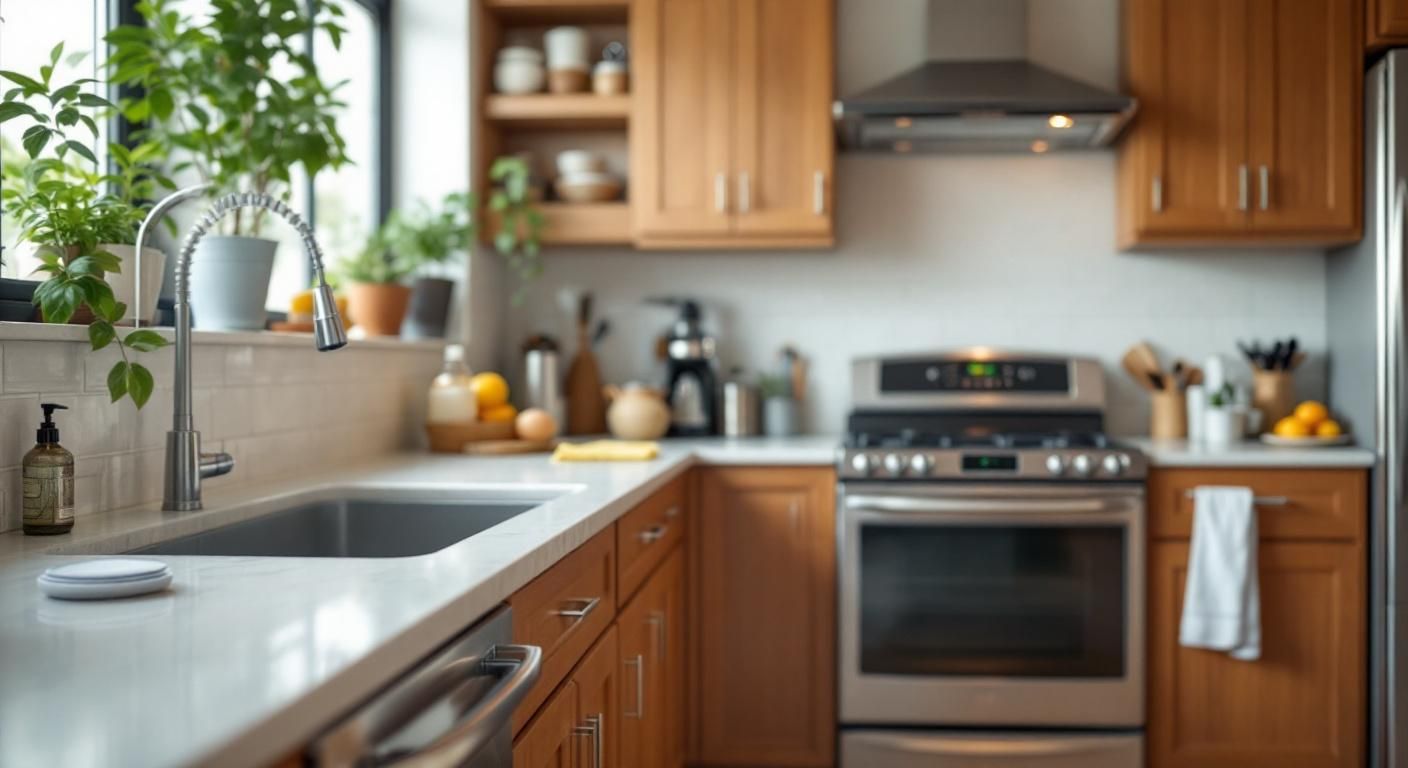
Cleaning kitchen cabinets effectively begins with understanding the material they are made from. Common materials include wood, laminate, and metal, each requiring different cleaning approaches. For wood cabinets, the focus should be on gentle cleaning to avoid damage to the finish. Laminate cabinets can tolerate stronger cleaners, but caution is needed to prevent discoloration. Metal cabinets are typically the easiest to clean, but care should be taken to avoid scratches and rust. Knowing the material allows for tailored cleaning strategies that preserve the integrity and appearance of your cabinets.
Wood Cabinets
Wood cabinets need special care to maintain their finish. Use a mild soap mixed with warm water for cleaning. Avoid soaking the wood, and instead, use a damp cloth to wipe down surfaces. For stubborn stains, consider a mixture of vinegar and water, applied gently.
Laminate Cabinets
Laminate cabinets can handle more robust cleaners. A solution of equal parts vinegar and water works well for everyday cleaning. For grease buildup, a mixture of baking soda and water can be applied as a paste to tackle tough spots without damaging the laminate.
Metal Cabinets
Metal cabinets are relatively low-maintenance. A soft cloth dampened with soapy water is sufficient for regular cleaning. For tougher stains, a mild abrasive cleaner can be used sparingly. Always dry the surfaces thoroughly to prevent rusting.
Key Points:
- Different materials require tailored cleaning approaches.
- Gentle cleaning preserves the finish of wooden cabinets.
💡 Identify your cabinet material before cleaning to select the appropriate method.
Step-by-Step Cleaning Process
To achieve the best results when cleaning kitchen cabinets, follow a systematic approach. Start by removing all items from the cabinets and wiping down the surfaces with a dry cloth to eliminate dust. Next, prepare a cleaning solution based on the material of your cabinets. Use a soft cloth or sponge for application, and work in sections to ensure thorough cleaning. After cleaning, rinse with a damp cloth to remove any residue, then dry completely to prevent moisture damage. This organized method ensures no area is missed and helps maintain the cabinets’ appearance over time.
Preparation
Begin by emptying the cabinets and clearing the countertops. This not only gives you full access to all surfaces but also prevents any items from getting wet or damaged during the cleaning process. Dusting surfaces helps to remove any loose dirt.
Cleaning Technique
Apply the cleaning solution with a soft cloth, starting from the top and working your way down. Use circular motions to lift grime, and pay extra attention to corners and crevices where dirt tends to accumulate. Rinse frequently to avoid spreading dirt.
Finishing Touches
After cleaning, use a separate damp cloth to wipe away any remaining cleaning solution. Follow up with a dry cloth to ensure all surfaces are moisture-free. This prevents water damage and maintains the finish of your cabinets.
Key Points:
- A systematic approach ensures thorough cleaning.
- Rinsing and drying are essential to prevent damage.
💡 Always work from top to bottom to prevent dirt from falling onto cleaned areas.
EXPERT TIPS Pro Advice
Use microfiber cloths for cleaning.
Microfiber cloths are effective at trapping dust and dirt without scratching surfaces, making them ideal for kitchen cabinets.
Test any cleaning solution on a small area first.
This helps ensure that the cleaning solution does not damage the finish or color of your cabinets.
Clean kitchen cabinets regularly.
Establishing a regular cleaning schedule prevents the buildup of grease and grime, making maintenance easier.
Consider using a natural cleaning solution.
Natural solutions like vinegar and baking soda are effective and free from harsh chemicals, making them safer for household use.
Avoid using harsh chemicals or abrasive pads.
These can scratch or damage the finish of your cabinets, leading to more costly repairs or replacements.
Frequently Asked Questions
Conclusion
Cleaning kitchen cabinets effectively requires regular maintenance and the right techniques. Using mild soap or natural solutions like vinegar can help remove grease and stains without damaging the finish. Frequent cleaning prevents buildup, ensuring your cabinets remain in great condition and visually appealing.
🎯 Key Takeaways:
- Clean kitchen cabinets at least once a month.
- Use mild soap or natural solutions for cleaning.
- Avoid harsh chemicals that can damage finishes.
- Regular cleaning prevents grease buildup.
- Test any cleaning solution on a small area first.
Expert Advice: Establish a routine for cleaning your kitchen cabinets to keep them looking their best. A little preventive maintenance goes a long way in preserving both the aesthetics and functionality of your kitchen.
Start your cabinet cleaning routine today to enjoy a cleaner, more welcoming kitchen space!