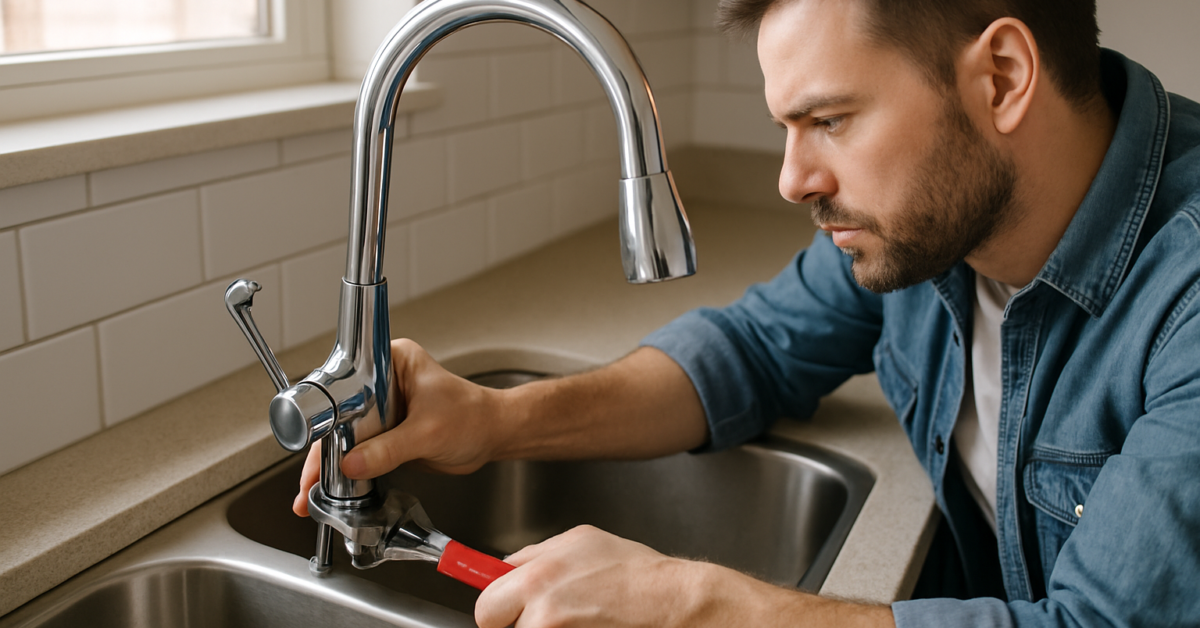
How to Remove a Kitchen Faucet: A Simple Guide
Are you facing the challenge of needing to replace or repair your kitchen faucet? Learning how to remove a kitchen faucet can seem daunting, but with the right guidance, it becomes a straightforward task. According to home improvement experts, mastering this skill can save you significant time and money on plumbing services. In this article, we’ll provide you with step-by-step instructions on safely and effectively removing your kitchen faucet, along with essential tips to make the process smoother. Whether you’re a seasoned DIYer or a complete novice, you’ll find valuable insights to help you tackle this project with confidence.
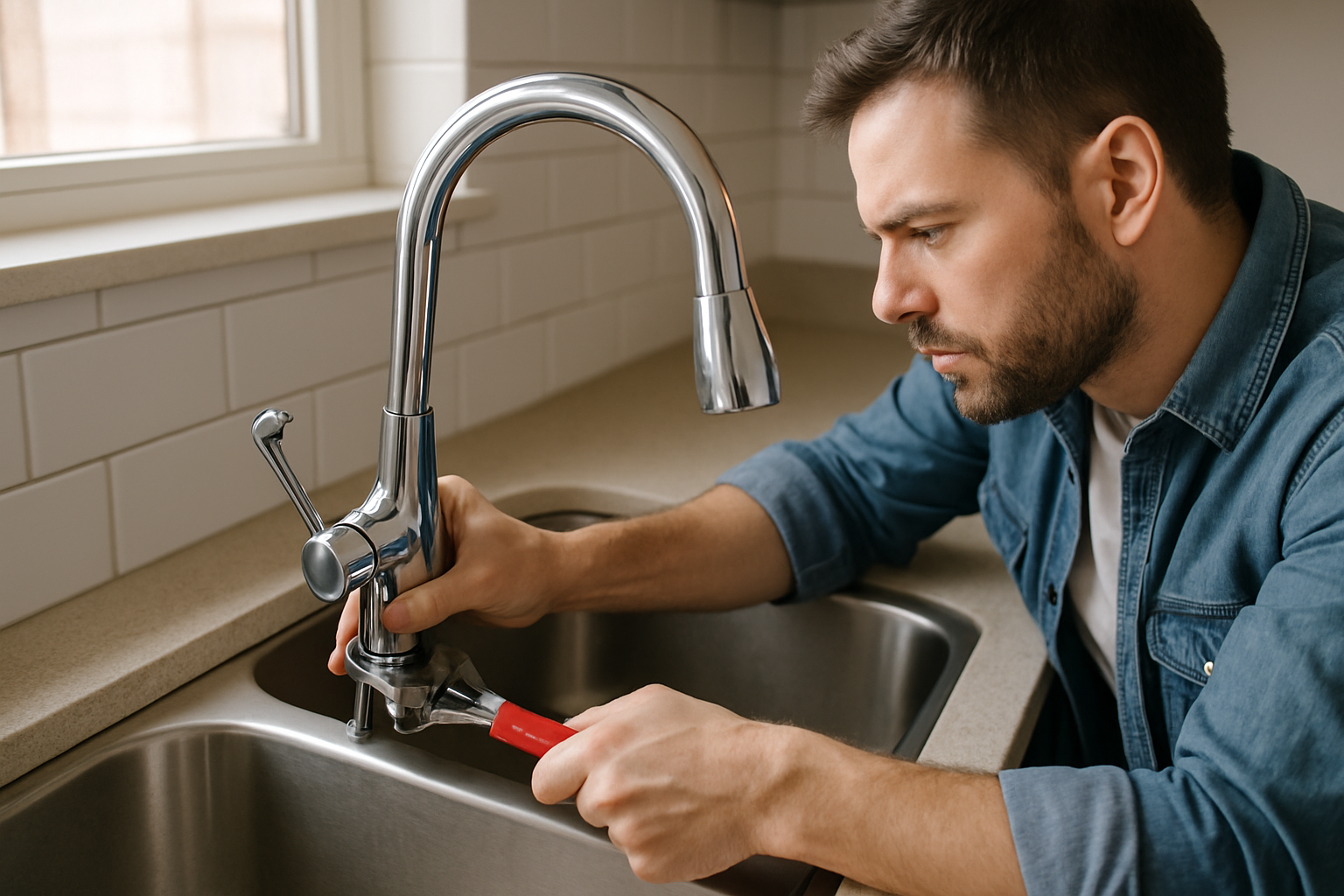
Understanding Your Kitchen Faucet
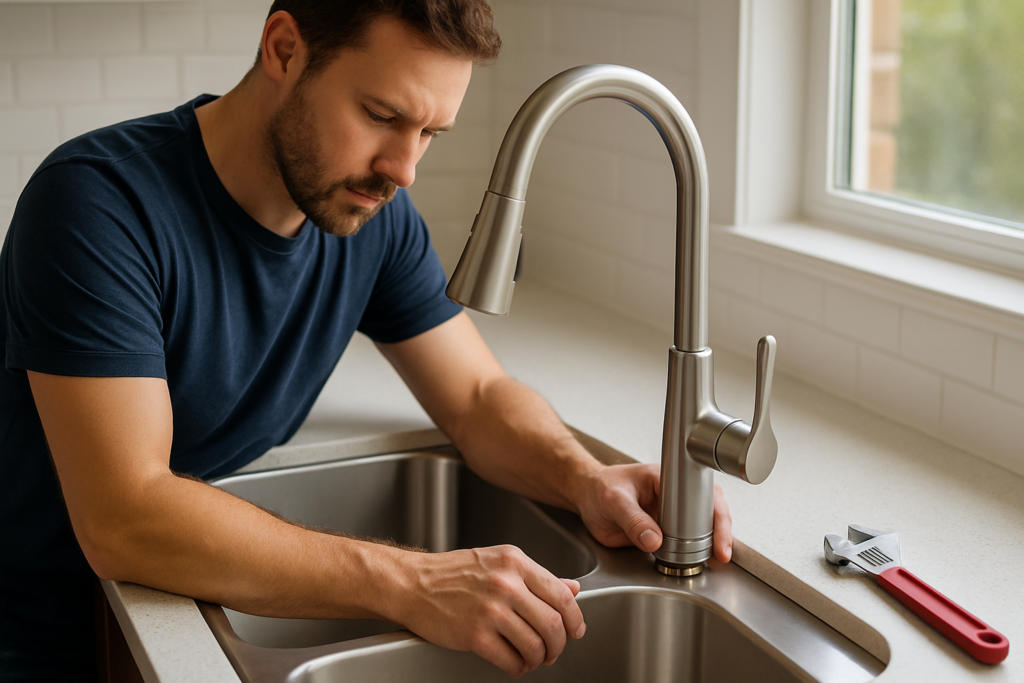
Before you embark on the task of removing your kitchen faucet, it’s vital to understand its components and how they function. Kitchen faucets typically consist of a spout, handle, and a base that connects to the sink. Knowing the type of faucet you have—whether it’s a single-handle, double-handle, or pull-down model—can influence your removal process. Additionally, familiarize yourself with the plumbing beneath your sink, including the water supply lines and shut-off valves, as these will need to be addressed during the removal.
Types of Kitchen Faucets
There are several types of kitchen faucets, including pull-down, pull-out, and standard faucets. Pull-down faucets have a retractable spray head, while pull-out faucets extend from the base. Single-handle faucets allow for easy temperature adjustments with one lever, whereas double-handle versions provide separate controls for hot and cold water. Knowing your faucet type will help tailor your removal strategy.
Tools You’ll Need
Before you start the removal process, gather essential tools such as a basin wrench, adjustable wrench, and a screwdriver. A bucket or towel to catch any water that may spill is also recommended. Having the right tools on hand will make the removal process smoother and more efficient.
Key Points:
- Identify the type of faucet for a tailored approach
- Gather essential tools before starting the process
Safety Precautions and Preparation
Removing a kitchen faucet involves interacting with plumbing components, which can sometimes lead to unexpected leaks or water spills. Therefore, it’s crucial to take safety precautions before starting the removal. First, turn off the water supply valves under the sink to prevent any water flow during the process. Additionally, it’s wise to protect your countertop and the sink area with towels or a cloth to catch any residual water and avoid damage. Proper preparation ensures a safer and cleaner workspace.
Shutting Off the Water Supply
To safely remove the faucet, locate the shut-off valves under the sink. Turn them clockwise until they are fully closed. This step is essential to prevent flooding and ensure that no water flows through the lines while you work. Always double-check that the water is off by turning on the faucet to see if any water comes out.
Clearing the Area
Before starting your project, clear out any items stored under the sink to give yourself ample workspace. This makes it easier to access plumbing and reduces the risk of damaging your belongings. A clean area also allows for better visibility, making the removal process more straightforward.
Key Points:
- Turn off water supply to prevent leaks
- Clear the workspace for easier access and visibility
Preparation and Tools Needed for Faucet Removal
Before removing a kitchen faucet, proper preparation is essential. Start by gathering the necessary tools to ensure a smooth process. Commonly required tools include an adjustable wrench, basin wrench, screwdriver, and a bucket to catch any water. Additionally, it’s advisable to turn off the water supply to the faucet to prevent leaks and flooding. Locate the shut-off valves under the sink and turn them clockwise. If the valves are old or rusty, it might be wise to have a plumber replace them before starting the removal process.
Safety Precautions
Taking safety precautions is crucial when working with plumbing fixtures. Always wear safety goggles to protect your eyes from debris and avoid electrical hazards by ensuring that no electrical outlets are near the work area. It’s also wise to have towels on hand to dry any spills, preventing slips and falls.
Identifying Faucet Types
Understanding the type of faucet you are dealing with can simplify the removal process. There are various types, including single-handle, double-handle, pull-out, and pull-down faucets. Each type has different mounting and connection methods, so identifying yours will help you know what tools to use and how to approach disassembly.
💡 Always have a bucket ready to catch any residual water.
💡 Labeling parts as you disassemble helps with reinstallation.
Step-by-Step Guide to Removing a Kitchen Faucet
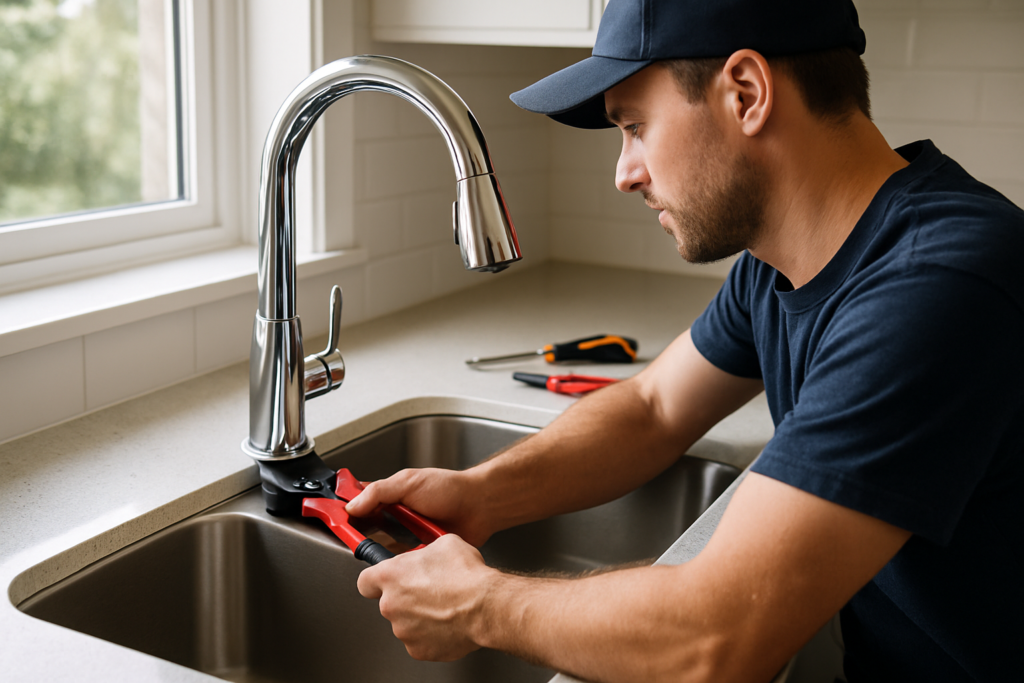
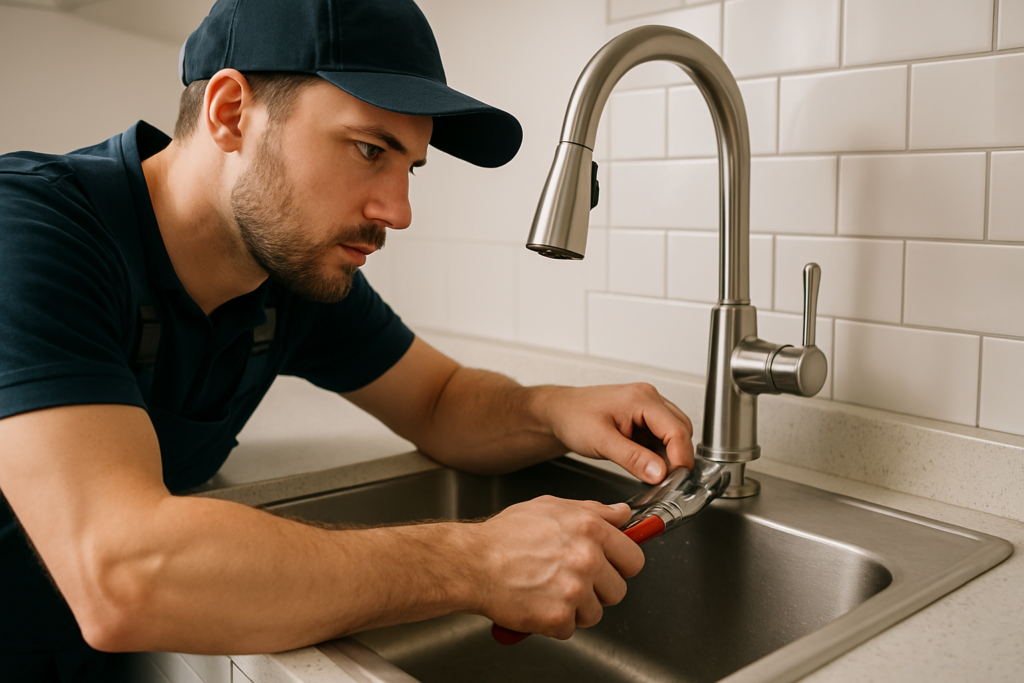
Once you have prepared and gathered your tools, follow a systematic approach to remove the faucet. Start by disconnecting the water supply lines from the faucet. Use the adjustable wrench to loosen the nuts, being careful not to apply excessive force, which can damage the plumbing. Next, remove the mounting nuts that secure the faucet to the sink, typically located underneath. Once all connections are undone, gently lift the faucet out from the sink. If it’s stuck, wiggle it gently to release any remaining seals or debris that may be holding it in place.
Disconnecting Water Supply Lines
To safely disconnect the water supply lines, first ensure that the water valves are closed. Use your adjustable wrench to loosen the nuts connecting the water lines to the faucet. Be prepared for some water to spill out, so have your bucket and towels ready. After loosening, remove the lines completely to free the faucet.
Removing the Faucet from the Sink
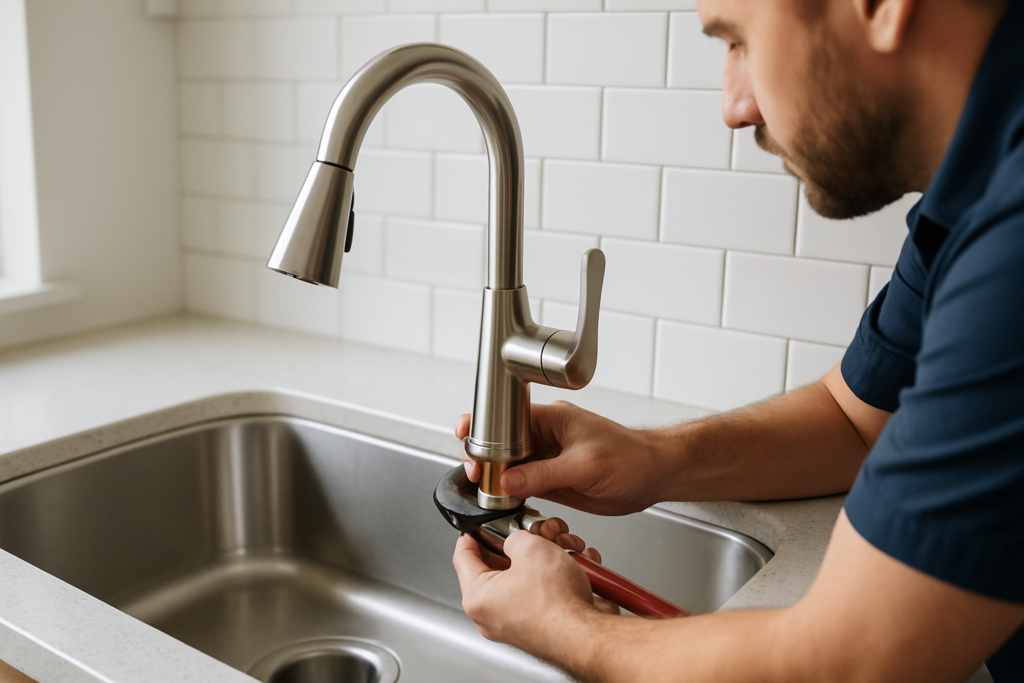
Once the water lines are disconnected, locate the mounting nuts holding the faucet in place. Using a basin wrench, untighten these nuts carefully. If they are rusted or difficult to turn, applying penetrating oil can help. Once loose, remove the nuts and gently pull the faucet from the sink, checking for any remaining connections that might still be attached.
💡 Take photos during disassembly for reference.
💡 Use a magnetic tray to keep small parts organized.
EXPERT TIPS Pro Advice
Use a basin wrench for tight spaces
A basin wrench allows you to reach and loosen nuts in confined areas, making the process easier and preventing damage to surrounding plumbing.
Loosen fittings before full disassembly
Loosening fittings while they are still partially connected can help prevent stripping threads and makes removal smoother.
Inspect the sink after removal
Check for any damage or corrosion on the sink surface after removing the faucet; this is an opportunity to repair any issues before installing a new fixture.
Have replacement parts handy
If you’re upgrading to a new faucet, ensure you have all necessary parts ready to avoid delays in your plumbing project.
Ask for help if needed
If you encounter difficulties or heavy lifting, don’t hesitate to ask for assistance. A second pair of hands can make a significant difference.
Frequently Asked Questions
Conclusion
Removing a kitchen faucet requires proper tools and preparation, such as shutting off the water supply and cleaning the area. By following the steps outlined, you can efficiently detach the faucet and assess whether a replacement is necessary for your kitchen.
🎯 Key Takeaways:
- Gather necessary tools: adjustable wrench, basin wrench, screwdriver.
- Always turn off the water supply before beginning any work.
- Clean the faucet area to prevent debris from affecting plumbing.
- Use penetrating oil if the faucet is stuck.
- Assess the condition of the faucet after removal.
Expert Advice: Approach the faucet removal process methodically, ensuring you follow each step carefully. This will prevent damage and make the procedure smoother. Don’t hesitate to seek help if you’re unsure about any part of the process.
Now that you’re equipped with the knowledge to remove a kitchen faucet, consider exploring further plumbing projects or maintenance tasks to enhance your home.