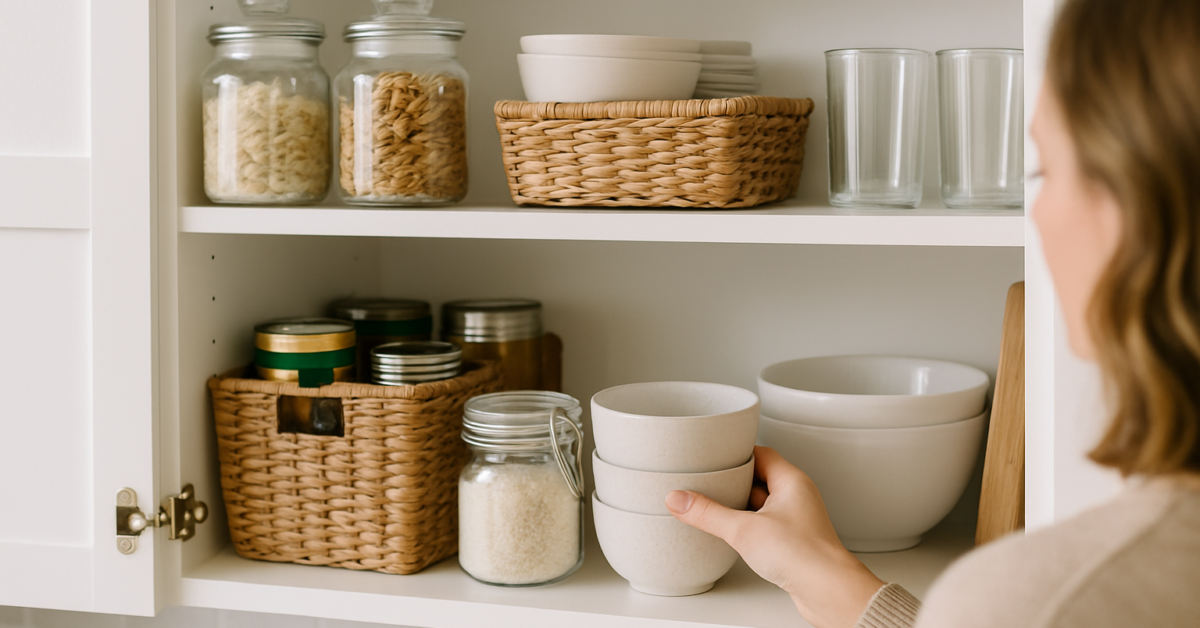
How to Arrange Your Kitchen Cupboards for Optimal Organization
Are your kitchen cupboards a chaotic mess, making cooking a frustrating experience? You’re not alone. Many homeowners struggle with how to arrange their kitchen cupboards effectively, leading to wasted time and space. With over 15 years of experience in home organization, I’ve helped countless individuals transform their kitchens into functional and aesthetically pleasing spaces. In this article, you will learn practical tips and strategies on how to arrange your kitchen cupboards for maximum efficiency. From decluttering your existing items to creating a systematic storage solution, we’ll guide you through each step of the process, ensuring you can find what you need when you need it and enjoy a more organized kitchen environment.
Understanding the Basics of Kitchen Cupboard Arrangement
Arranging your kitchen cupboards effectively is essential for maximizing space and enhancing functionality. The first step is to assess your kitchen’s layout and your cooking habits. Focus on grouping similar items together, which will streamline meal preparation. Consider the zones in your kitchen: cooking, prep, and cleaning, and how they relate to your cupboard arrangement. This foundational understanding will inform how you prioritize and organize your items.
Assessing Your Kitchen Layout
Begin by taking stock of your kitchen layout. Identify key areas like the stove, refrigerator, and sink. Think about the flow of movement while cooking and how frequently you access certain items. Items used together, such as pots and pans near the stove, should be easily reachable, reducing the time spent searching for essentials.
Identifying Your Cooking Habits
Understanding your cooking habits is crucial in cupboard arrangement. If you frequently bake, ensure baking sheets and mixers are close at hand. For those who cook large meals, consider designating a cupboard for bulk ingredients. Tailoring your storage to fit your habits will enhance efficiency and enjoyment in the kitchen.
Key Points:
- Assess your layout for better organization
- Align cupboard arrangement with cooking habits
Essential Strategies for Organizing Kitchen Cupboards
Effective organization strategies can transform your kitchen experience. Start by decluttering your cupboards—remove items that are seldom used or expired. Next, implement a systematic approach for arranging your items. Consider using vertical space with shelving, and categorize items to streamline access. By organizing your cupboards strategically, you can create a functional and inviting kitchen environment.
Decluttering Your Cupboards
Begin by emptying your cupboards and sorting through items. Discard anything that is broken, expired, or rarely used. This process not only frees up space but also allows you to see what you have, making it easier to organize. Regular decluttering is key to maintaining an efficient kitchen cupboard system.
Categorizing and Storing Items
Once decluttered, categorize your items into groups such as cooking utensils, dishware, and pantry staples. Use bins or dividers to keep these categories organized. Store frequently used items at eye level and less used items higher up. This method not only enhances visibility but also makes it easier to maintain order.
Key Points:
- Declutter regularly for optimal space
- Categorize items for efficient access
Assessing Your Kitchen Needs
Before diving into arranging your kitchen cupboards, it’s crucial to assess your cooking habits and storage needs. Start by identifying frequently used items like pots, pans, and utensils. Consider how often you cook and what types of meals you prepare. Make a list of these items to guide your arrangement process. Additionally, evaluate the space available in your cupboards, taking note of shelf height, depth, and any existing organizational tools. This assessment will help you create a functional layout that maximizes efficiency and minimizes clutter.
Identifying Frequently Used Items
Take note of the items you use most often. Group them by category—cooking utensils, baking supplies, or dishware. Place these frequently used items in easily accessible cupboards to streamline cooking and reduce the time spent searching for tools.
Evaluating Available Space
Measure the dimensions of your cupboards and identify shelf heights. Know which items fit where; for example, larger pots might need lower shelves. This will help you optimize vertical space and ensure you use your cupboards efficiently.
Key Points:
- Assess your cooking habits to determine storage needs.
- Evaluate cupboard space to maximize efficiency.
💡 Create a cooking zone by placing related items together, such as mixing bowls near the stove.
Organizing and Storing Items Effectively
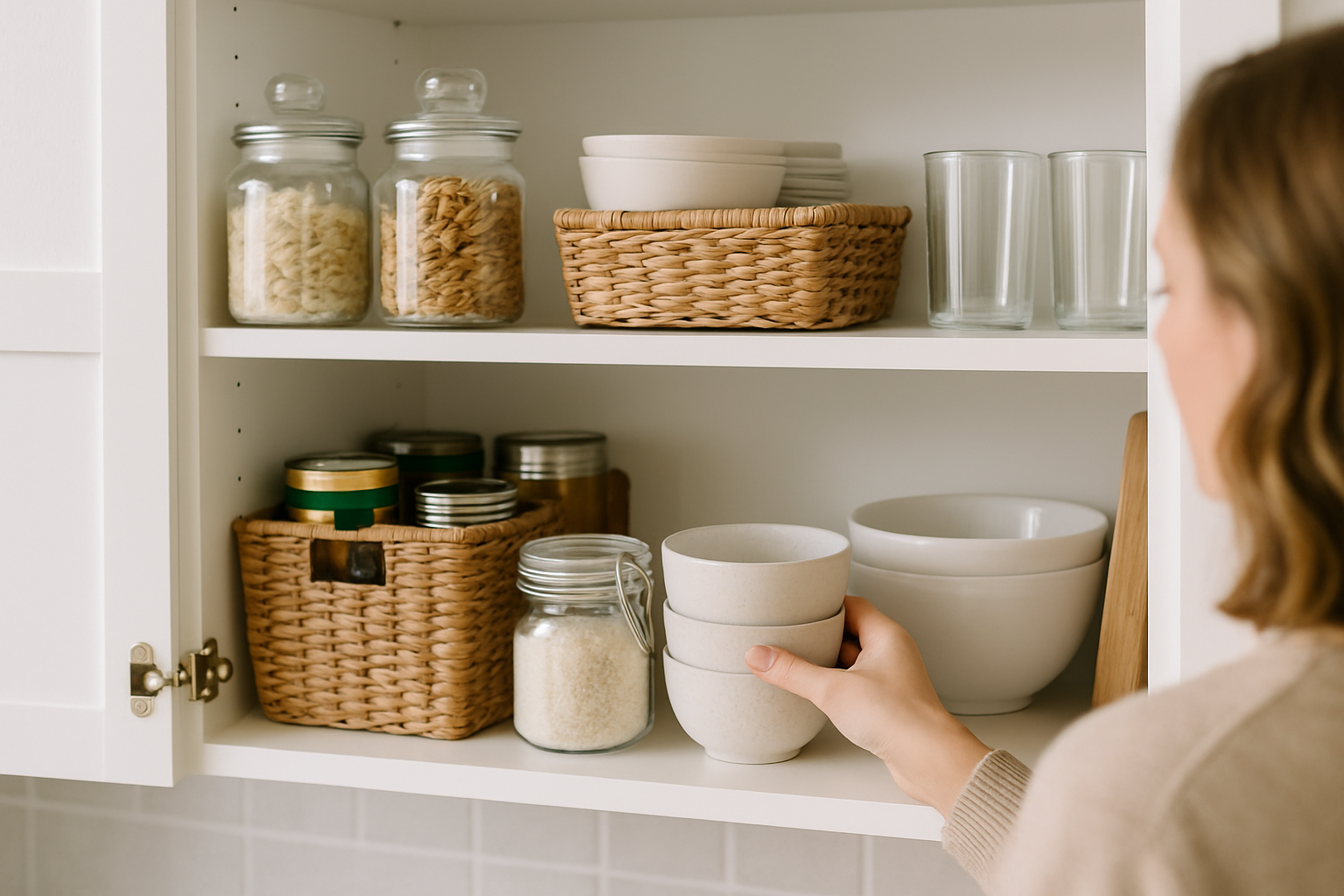
Once you’ve assessed your needs, it’s time to organize and store your kitchen items effectively. Use clear containers for pantry staples and label them to make finding ingredients easy. Stackable containers can help save space and keep the pantry neat. For dishes, consider using vertical dividers to prevent them from toppling over. Additionally, make use of drawer organizers for utensils to keep them separated and easily accessible, further streamlining your cooking process.
Utilizing Containers and Labels
Invest in clear containers for items like pasta, grains, and snacks. Label these containers for easy identification and quick access. This practice not only saves time but also helps you track inventory and reduce food waste.
Implementing Drawer Organizers
Use drawer organizers to separate utensils, cutlery, and tools. This prevents clutter and allows you to locate items quickly. Arrange items by frequency of use, placing everyday utensils at the front and less commonly used items at the back.
Key Points:
- Use clear containers and labels for easy identification.
- Implement drawer organizers to reduce clutter.
💡 Consider using tiered shelf risers to maximize cupboard height.
EXPERT TIPS Pro Advice
Measure before you organize
Knowing the dimensions of your items and cupboards ensures efficient use of space, helping you avoid frustration later when items don’t fit.
Rotate seasonal items
Store seasonal items in higher or less accessible cupboards and swap them out as needed. This keeps your frequently used items front and center.
Incorporate vertical space
Use stackable containers or shelf risers to take advantage of vertical space, making more room for items without requiring additional cupboard space.
Frequently Asked Questions
Conclusion
Arranging your kitchen cupboards effectively can significantly enhance your cooking experience. By grouping similar items, prioritizing accessibility, and maximizing space, you create a functional kitchen environment. Regularly reassessing your organization ensures that it meets your evolving culinary needs.
🎯 Key Takeaways:
- Group similar items together for easy access.
- Place frequently used items at eye level.
- Use baskets and tiered organizers to maximize space.
- Reorganize your cupboards at least once a year.
- Label containers for quick identification.
Expert Advice: Take the time to assess your kitchen cupboard organization regularly. Tailor your layout to fit your cooking style and habits, ensuring a more enjoyable and efficient kitchen experience.
Start your kitchen organization journey today by evaluating your current setup and making small adjustments to improve functionality.