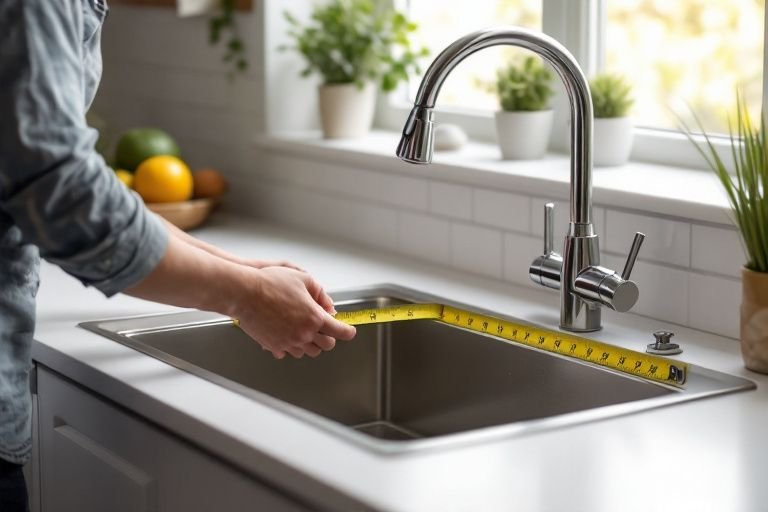
Are you planning a kitchen renovation or simply looking to replace your sink? Knowing how to measure kitchen sink dimensions accurately is crucial for ensuring a perfect fit in your countertop. Many homeowners underestimate the importance of precise measurements, leading to costly mistakes and frustrating installations. With over 15 years of experience in home improvement, we understand the nuances of sink measurements and will share our expertise with you. In this article, we will guide you through the essential steps to measure your kitchen sink, discuss key considerations such as depth and width, and provide tips to avoid common pitfalls. By the end, you’ll be equipped with the knowledge needed to make informed decisions and achieve a seamless installation.
Understanding the Importance of Measuring Your Kitchen Sink
Measuring your kitchen sink is a crucial step in various kitchen projects, from renovations to replacements. Accurate measurements ensure that your new sink fits perfectly in the existing space, preventing costly modifications. It also helps in selecting compatible faucets and accessories. Before you start measuring, gather the necessary tools, such as a tape measure and a notepad for recording dimensions. Familiarizing yourself with the anatomy of a sink will make the process easier and more efficient, helping you avoid errors that could lead to project delays.
Common Reasons for Measuring
There are several scenarios where accurate sink measurements are necessary. If you are replacing an old sink, you need to ensure that the new one fits the existing cutout in the countertop. If you’re remodeling, measuring will help you choose a sink that complements your kitchen’s design. Additionally, accurate dimensions are essential for selecting the right plumbing fixtures.
Essential Tools for Measuring
To measure your kitchen sink effectively, you’ll need a few basic tools. A tape measure is essential for obtaining accurate dimensions, while a notepad or digital device can help you keep track of your measurements. Having a level is also beneficial, as it ensures that your sink will be installed properly and remain functional over time.
Key Points:
- Accurate measurements prevent costly mistakes
- Understanding your sink’s anatomy streamlines the measuring process
Step-by-Step Guide to Measuring Your Kitchen Sink
Measuring your kitchen sink involves several key dimensions that must be taken into account. Start by measuring the width and length of the sink bowl, followed by the depth of the sink. Ensure you also measure the distance between the mounting holes if you plan on using a specific faucet. Taking multiple measurements will help ensure accuracy, as discrepancies can lead to fitting issues. Record all measurements clearly and double-check them before making any purchases to avoid unnecessary complications during installation.
Measuring the Sink Bowl Dimensions
Begin by measuring the width and length of the sink bowl. Place the tape measure at the widest points of the bowl and ensure it is straight to get an accurate reading. For round or oval sinks, measure the diameter across the center. Document these measurements carefully, as they will guide your selection of compatible models.
Determining the Sink Depth and Mounting Hole Distance
Next, measure the depth of the sink from the rim to the bottom of the bowl. This dimension is crucial for determining how much space you have for plumbing below the sink. If your sink has mounting holes for a faucet, measure the distance between them; this will help you choose the right faucet installation.
Key Points:
- Take multiple measurements for accuracy
- Document measurements clearly to avoid confusion
Understanding Standard Sink Dimensions
To effectively measure a kitchen sink, it’s essential to understand the standard dimensions associated with various types. Most kitchen sinks come in single, double, or triple bowl configurations, with measurements typically ranging from 22 to 33 inches in length and 16 to 22 inches in width. Depth can vary from 8 to 10 inches. Knowing these dimensions helps in comparing your existing sink with potential replacements, ensuring a proper fit. Additionally, familiarize yourself with the installation types, such as drop-in or undermount, as they may influence the overall requirements.
Types of Sink Configurations
Common configurations include single-bowl, double-bowl, and farmhouse sinks. Single-bowl sinks are generally more spacious for washing larger items, while double-bowl sinks allow for multitasking. Each configuration has distinct measurements; knowing these will aid in selecting the best option for your kitchen layout.
Standard Measurements to Consider
When measuring, consider the length, width, and depth of the sink. Width is critical for countertop compatibility, while depth affects usability. Measure from the outer edges of the sink, ensuring to account for any additional features like flanges or faucet holes to ensure a seamless fit in your kitchen.
Key Points:
- Understand standard kitchen sink dimensions.
- Know the different sink configurations available.
💡 Always measure at least twice to confirm accuracy before purchasing a new sink.
Measuring Techniques for Accurate Sizing
Accurate measurement is crucial, especially when replacing or installing a new sink. Use a tape measure for precision and note down all dimensions, including any irregularities in shape. Start by measuring the length and width at the top edge of the sink, as this will dictate what size can fit into your countertop. Also, measure the depth from the top rim to the bottom of the sink basin to ensure it meets your needs.
Steps for Accurate Measurement
Begin by clearing the sink area and drying it. Use a tape measure to find the length and width by measuring the outer edges of the sink. For depth, measure from the top edge to the bottom of the basin. Record all measurements carefully to avoid errors during selection.
Accounting for Installation Type
Different installation types can affect the measurements. For drop-in sinks, ensure to measure the cut-out size as well. For undermount sinks, measure the depth and consider the space available beneath the countertop. Accurately accounting for installation type helps in achieving a perfect fit.
Key Points:
- Accurate measurements are crucial for installation.
- Consider installation type when measuring.
💡 Use a level to ensure your measurement is straight, especially for depth.
EXPERT TIPS Pro Advice
Measure from multiple points
This ensures you capture any variations in the sink’s shape, preventing potential fitting issues.
Document your measurements
Keeping a record of your measurements helps in comparing different sinks and avoids confusion during the selection process.
Consult with a professional if unsure
If you’re unsure about the measurements or installation, consulting a kitchen specialist can save time and resources.
Consider future needs
Think about your long-term kitchen usage. If you plan to host or cook frequently, a larger sink may be more beneficial.
Use a flexible measuring tape
A flexible tape can easily contour around the sink’s shape, providing more accurate measurements than a rigid ruler.
Frequently Asked Questions
Conclusion
Measuring your kitchen sink accurately is essential for a proper fit during installation. By using the right tools and measuring key dimensions like length, width, and depth, you can avoid common pitfalls. Always consider surrounding features and plumbing needs for a seamless setup.
🎯 Key Takeaways:
- Use a measuring tape and notepad for accurate measurements.
- Measure length, width, and depth at the widest points.
- Ensure measurements accommodate surrounding cabinetry and plumbing.
- Accurate measurements prevent installation issues.
Expert Advice: Take your time while measuring to ensure precision, as even small discrepancies can lead to significant installation challenges. Consider double-checking your measurements for peace of mind.
Now that you know how to measure your kitchen sink, gather your tools and take accurate measurements to ensure a successful installation!